
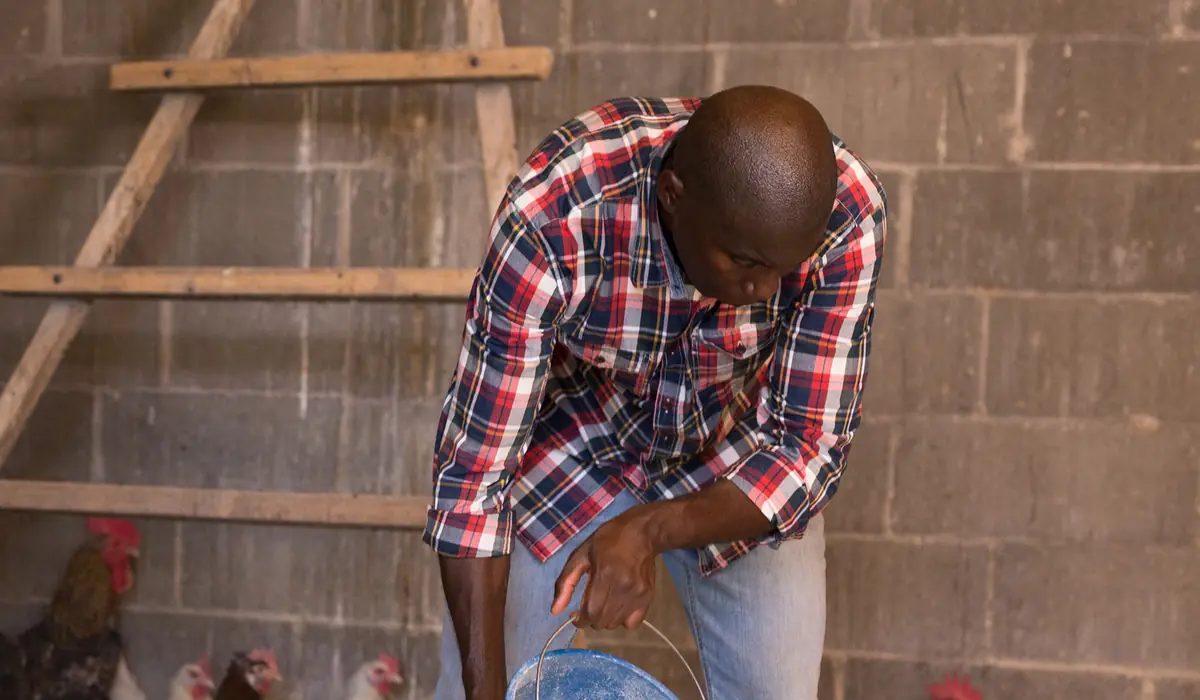
What is poultry insurance?
Poultry insurance is agricultural insurance for layers, broilers and kienyeji flocks. It pays the value of birds that die from uncontrollable disease, accidents, heat stress, smothering, fire, lightning, storm or flood, and can add theft after a break-in and birds in transit. Cover usually runs up to the bird capacity of your house.
What poultry insurance covers
Disease
Death from uncontrollable disease and epidemics, until the government declares an outbreak.
Heat and smothering
Birds lost to heat stress or piling and suffocation in the house.
Fire, storm and flood
Losses when the house burns, is flooded or is damaged by a storm.
Accidents
Electrocution, collapse of the structure and similar sudden events.
Theft (optional)
Birds stolen after a forced entry into a locked house.
Transit (optional)
Day-old chicks or point-of-lay birds on the way to your farm.
Flock size, ages and minimum premiums
Published poultry terms cover broilers from day-old to 8 weeks and layers from day-old to 18 months, up to the bird capacity of the house. Minimum premiums run from KES 1,000 to 5,000 a policy, and one insurer's microinsurance arm needs at least 500 birds.
Source: Kenyan insurers' poultry and livestock pages, checked 18 October 2026
Kenya had about 59.3 million indigenous chickens in 2024, about three-quarters of the national flock, while broiler numbers fell to about 5 million.
Source: Zootecnica International, citing KNBS (November 2025)
Layers, broilers and improved kienyeji in deep-litter or cage systems are the easiest to insure. Free-range flocks are harder to count, so expect more questions.
Layers or broilers: how cover differs
| Layers | Broilers | |
|---|---|---|
| Insured age | Day-old to about 18 months | Day-old to 8 weeks |
| Policy term | Usually annual | Annual, following each batch |
| Value grows with | Age up to point of lay | Weight up to market |
| Main risks | Disease, heat stress, theft | Smothering, heat stress, disease |
- Layers
- Day-old to about 18 months
- Broilers
- Day-old to 8 weeks
- Layers
- Usually annual
- Broilers
- Annual, following each batch
- Layers
- Age up to point of lay
- Broilers
- Weight up to market
- Layers
- Disease, heat stress, theft
- Broilers
- Smothering, heat stress, disease
Both are usually insured to the house's bird capacity rather than bird by bird.
What insurers ask for
- The type and number of birds, their age, and your house capacity.
- A vaccination programme, ideally signed off by a vet.
- Mortality records for recent batches.
- The housing: deep litter, cages or free-range, and how it is secured at night.
- Your ID and KRA PIN.
What poultry insurance costs
No Kenyan insurer publishes a per-bird rate. Minimum premiums seen in the market run from KES 1,000 to 5,000 a policy, so most quotes start there and rise with the value of the flock.
See farm insurance costs and worked examples
If birds die
- Report within 24 hours Call us or the insurer as soon as you see abnormal deaths.
- Keep the birds Do not dispose of them until the vet has done a post-mortem.
- Count and photograph Record the number dead, the batch age and take dated photos.
- Send the claim Claim form, vet's report and flock records; a police abstract for theft.
Frequently asked questions
What does poultry insurance cover?
It pays for birds that die from uncontrollable disease, accidents, heat stress, smothering, fire, lightning, storm or flood. Theft after a break-in and birds in transit can be added. Layers and broilers are covered, and kienyeji flocks can be insured with some insurers.
What is the minimum flock size for poultry insurance?
It depends on the insurer. One insurer's microinsurance arm takes flocks of 500 birds or more, while others set no bird count but charge a minimum premium of KES 1,000 to 5,000 a policy, which in practice suits flocks of a few hundred birds upwards.
How much does poultry insurance cost?
No Kenyan insurer publishes a per-bird rate. Expect the premium to be a percentage of the flock's value, subject to a minimum premium of KES 1,000 to 5,000. We get quotes based on your bird numbers, age and housing.
Is Newcastle disease or bird flu covered?
Policies cover death from uncontrollable disease and epidemics, but the wordings we checked do not name Newcastle, Gumboro or avian influenza, and losses after the government declares an outbreak or orders culling are often excluded. Ask us to confirm the exact disease wording before you buy.
At what age can birds be insured?
Published terms cover broilers from day-old to 8 weeks and layers from day-old to about 18 months. Cover is usually set to the bird capacity of your house, so the policy follows each new batch.
Can kienyeji chickens be insured?
Yes, where the birds are housed and counted. Improved kienyeji kept in a house or a fenced run can be insured like layers. Fully free-ranging village birds are hard to count and value, so most insurers decline them or cover only fire and theft from the night shelter.
What does poultry insurance not cover?
Typical exclusions on poultry policies are:
- Deaths from poor feeding, starvation or feed poisoning
- Diseases you could prevent by vaccination, where the programme was not followed
- Losses after a government-declared outbreak or culling order
- Birds that go missing without signs of forced entry
- Normal daily mortality within the expected rate
A written vaccination programme signed off by a vet makes both buying and claiming easier.
How do I claim for dead birds?
Report the losses within 24 hours, keep the dead birds for a vet's post-mortem, take dated photos, and send the vet's report with the claim form and your flock records. For theft, add a police abstract.
Will a lender accept poultry insurance?
Often, yes. Lenders financing a new house, chicks or feed increasingly ask for the flock to be insured, so that a disease outbreak does not leave the loan unpaid. We can note the lender's interest on the policy.
Protect the next batch
Tell us your birds, flock size and housing. We find the insurers that cover poultry and compare their terms.
Licensed by IRA · No obligation · We reply within 1 hour
Sources (4)
- Kenyan insurers' poultry and livestock pages, checked 18 October 2026
- Zootecnica International, citing KNBS (November 2025)
- Kenyan insurers' livestock pages and brochures, checked 18 October 2026
- Business Daily, 4 August 2026
Facts and published prices checked 18 Oct 2026; last reviewed October 2026 by Naveah Capital. Rates shown are published bands, scheme figures and market estimates before levies, not a quote or a promise. Naveah Capital Insurance Agency is an IRA-licensed insurance agency in Nairobi; this page is general information, and your policy wording decides your cover.

 IRA Licensed
 KSB Member
 Reviews 4.9